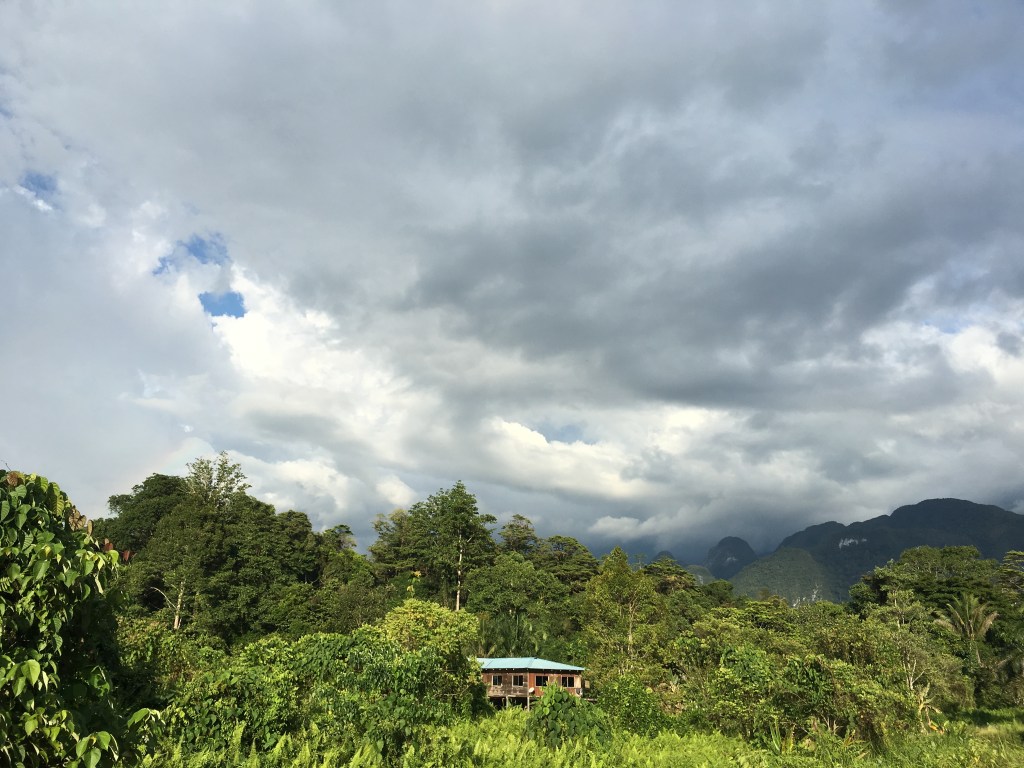
I am drafting this blog in Sarawak, Malaysia also known as Malaysian Borneo. Borneo is an island comprised of Brunei, sections of Malaysia and sections of Indonesia. When people think of Borneo they are most likely thinking of the rural areas of Sarawak and Sabah– which are known for caving, scuba diving, volcanoes, trekking and Orangutangs. Historically, Borneo was home to numerous nomadic tribes, and is still very sparsely populated and wild.

Malaysian Borneo is home to Gunung Mulu National Park, a UNESCO World Heritage Site and home to the largest cave chamber in the world as well as the largest cave system. We came to Borneo primarily to see the caves, so we headed to Gunung Mulu. We left the kids at home this time which was a very good idea (they would have LOVED this trip but it would have been a logistical nightmare and not very safe). A few things to know about Borneo:
1. We didn’t think it was possible for any place to be more humid than Bangkok…then we got to the rainforest. We really need to schedule some cold weather trips.
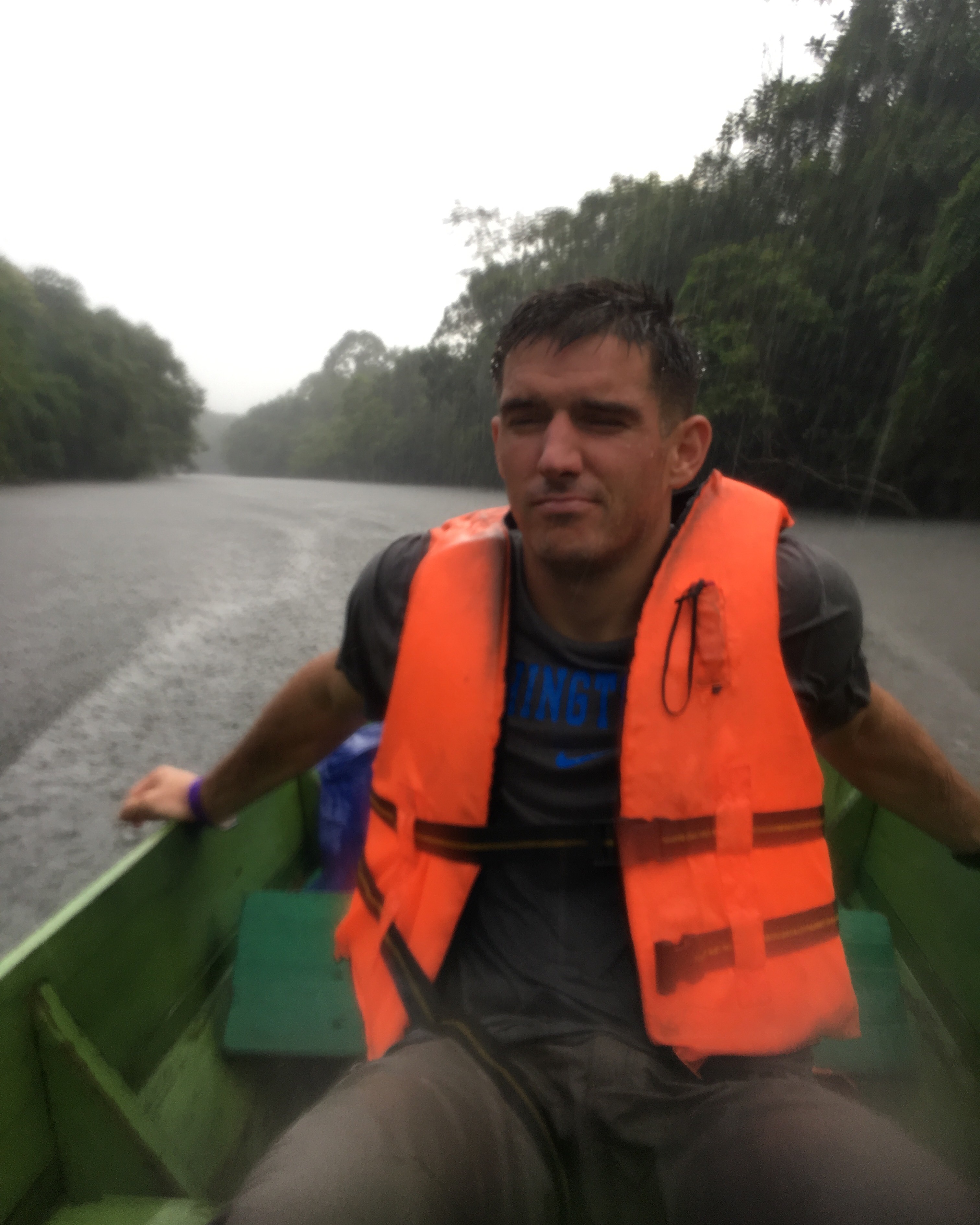
2. It is going to rain every single day. Most days it will rain multiple times a day. It will rain when the sun is out and shining and it will rain with no warning. Bring your rain jacket and come prepared with multiple pairs of shoes!
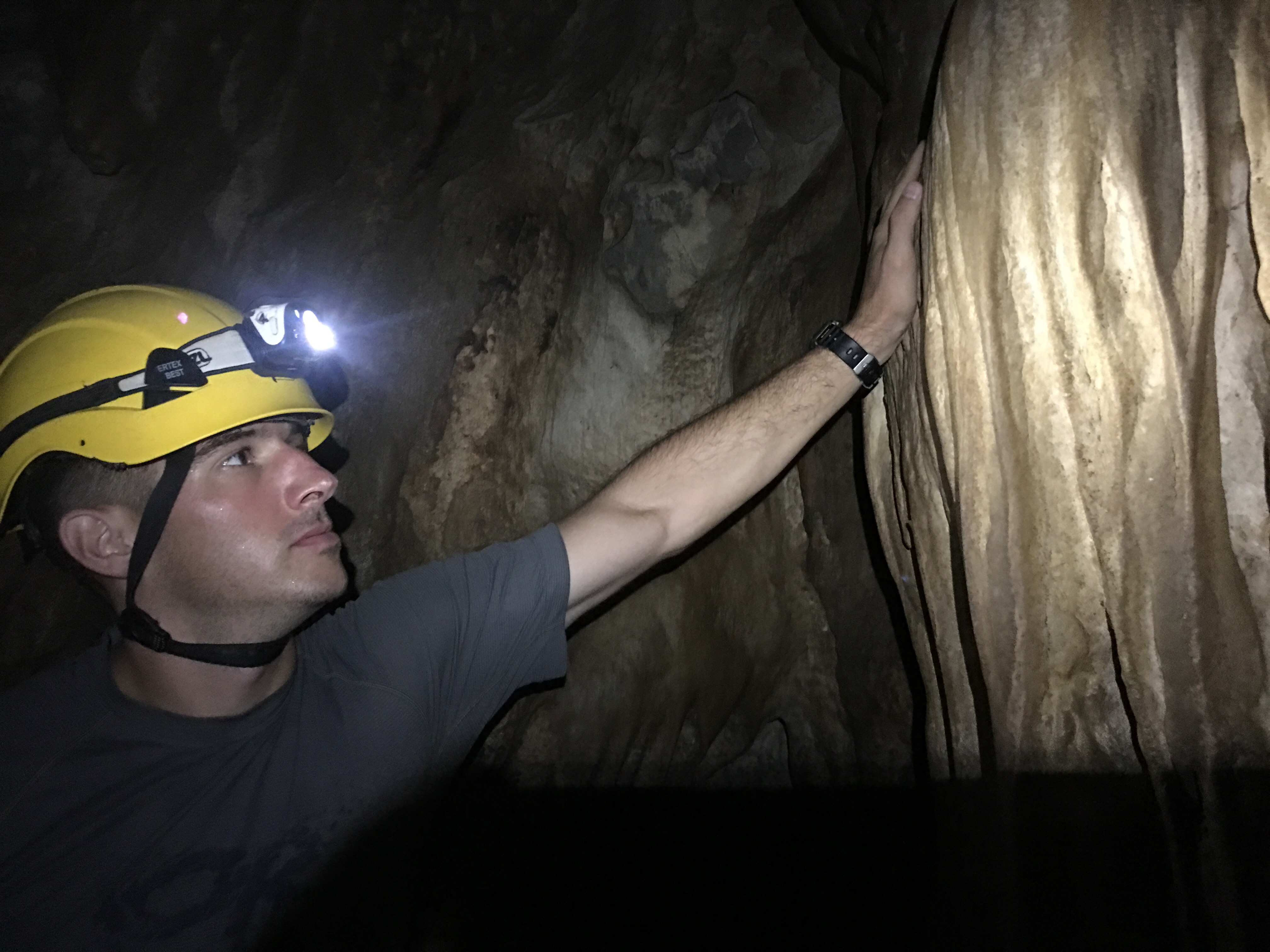
3. It is very difficult to take pictures in a cave. But that didn’t stop me from trying!
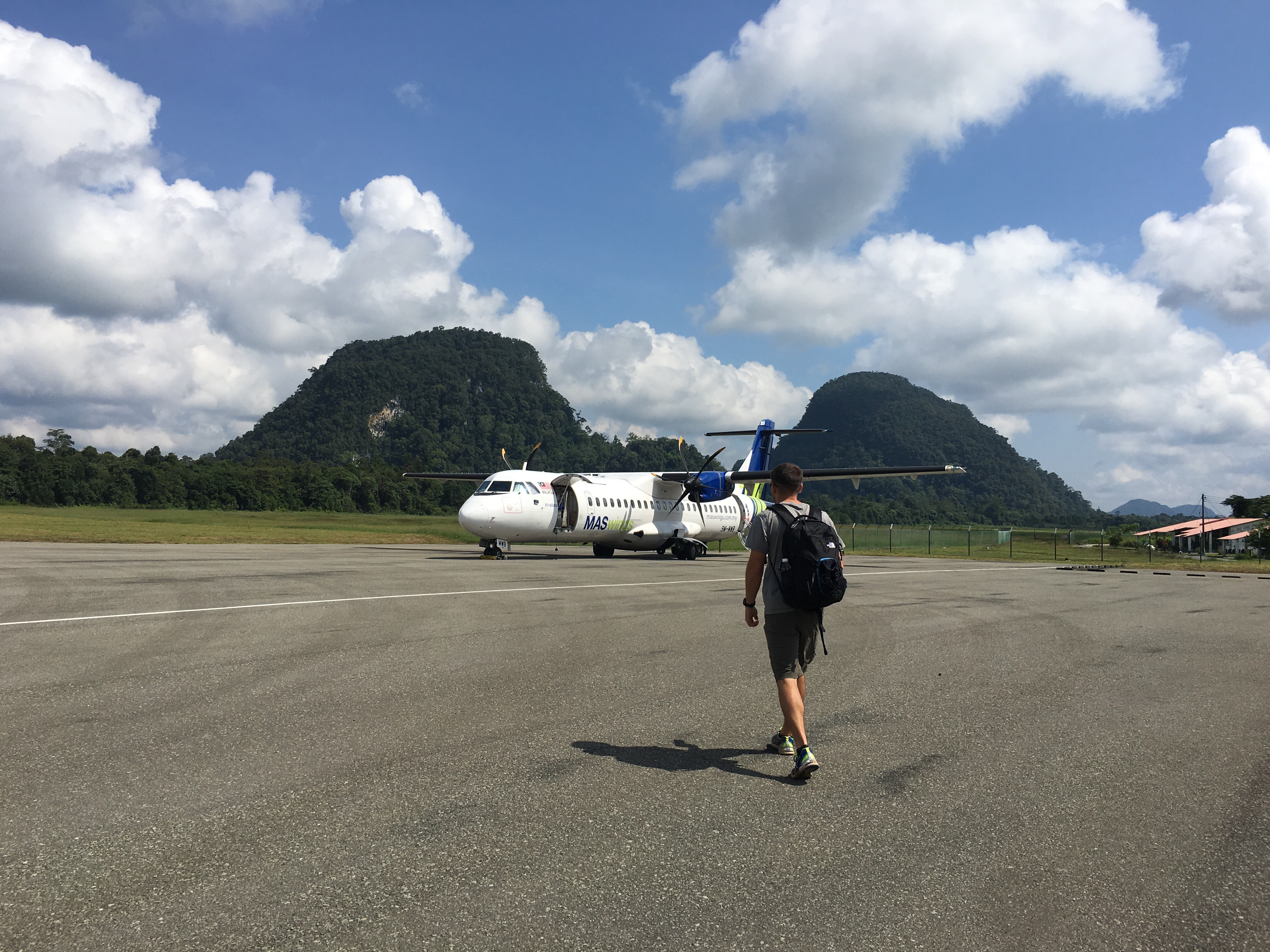
Travel: Getting to Malaysian Borneo was pretty difficult. We needed to get to Mulu airport, the local airport near Gunung Mulu Park. The only airline that flies into Mulu is Malaysian Air and there is only one main route –through Miri Airport (another very small airport in Malaysian Borneo). From Bangkok you need to hop from Kuala Lumpur International Airport to Miri to Mulu. Flights into Miri and Mulu are limited. So, depending on the timing of flights, your trip can take as little as 8 hours or up to 20 hours. Our trip out to Mulu took 20 hours. The trip back to Bangkok took considerably less time.

Lodging: There are not many options for lodging near Gunung Mulu. You can either lodge in bungalows at the park or you can stay at the Marriot Mulu (formerly the Royal Mulu Resort). If you opt to do overnight treks you will, of course, camp in the forest at designated camp locations. We opted to stay at the Marriot since this trip was meant to be a break from our kids (sleeping with no air con, surrounded by bugs didn’t sound appealing after waking up in the middle of the night for two months to take care of newborn). Also, we did not bring our camping gear to Bangkok. The hotel advertised wi-fi which we hoped would keep us connected to Anna. However, the only way to get wi-fi this far out from civilization is through satellite. The mountains and intermittent storms disrupted the satellite signal and made the wi-fi unstable and pretty much unusable.
Gunung Mulu Park: The park is a UNESCO World Heritage Site. It is privately and independently managed. Some describe the park as the most corporate natural park in the world. As a result of the private management, the park is in very good condition; walkways are well maintained and multiple guided tours are offered throughout the day. The disadvantage of private management is that you cannot go to most places in the park without a licensed park guide. Tours range from 30 RM (approx 7 USD) to over 200 RM (approx 50 USD). The tours are excellent and the cost is not exuberant for what you get. The most expensive selections are for spelunking activities and overnight trips to the Summit or Pinnacles (Chad and I did not visit the Summit or Pinnacles–so, I won’t discuss that here).
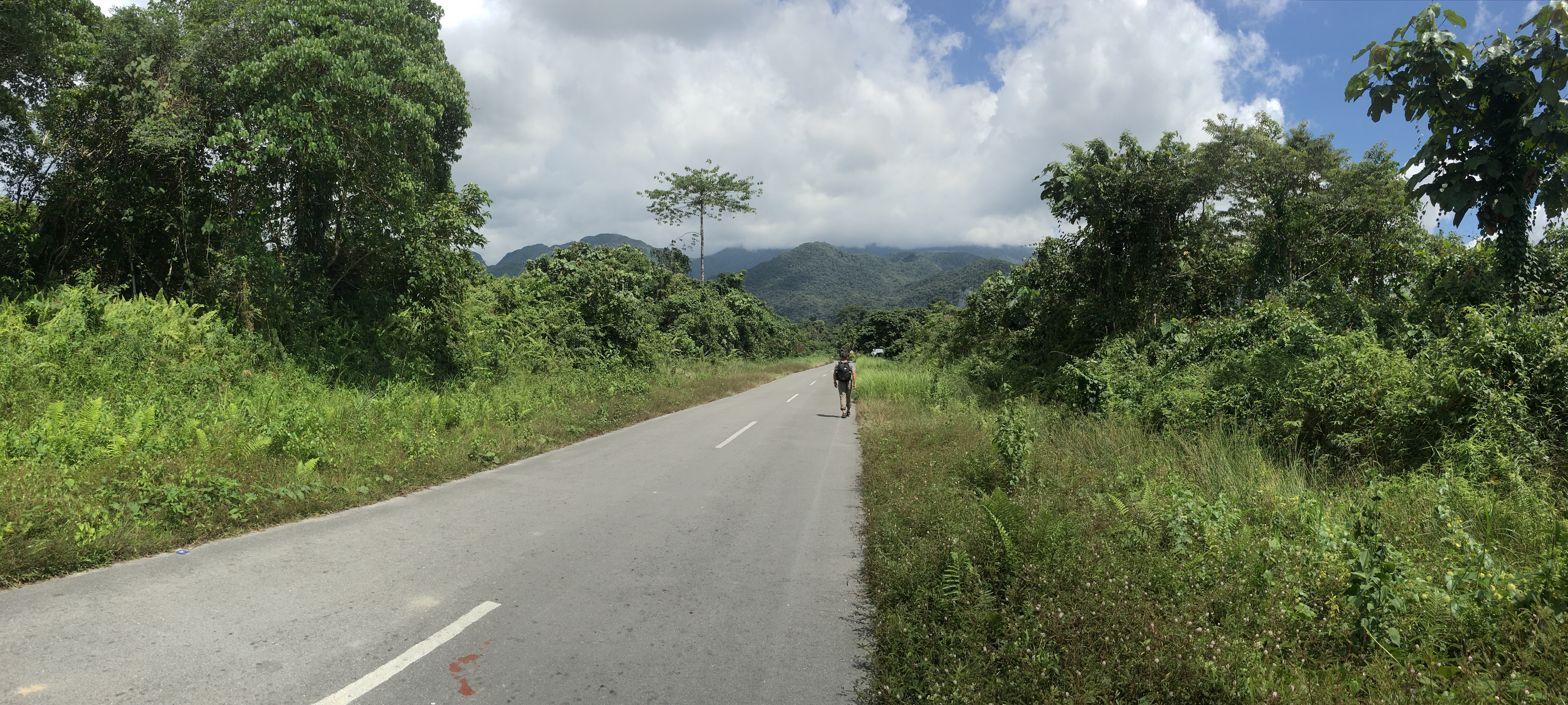
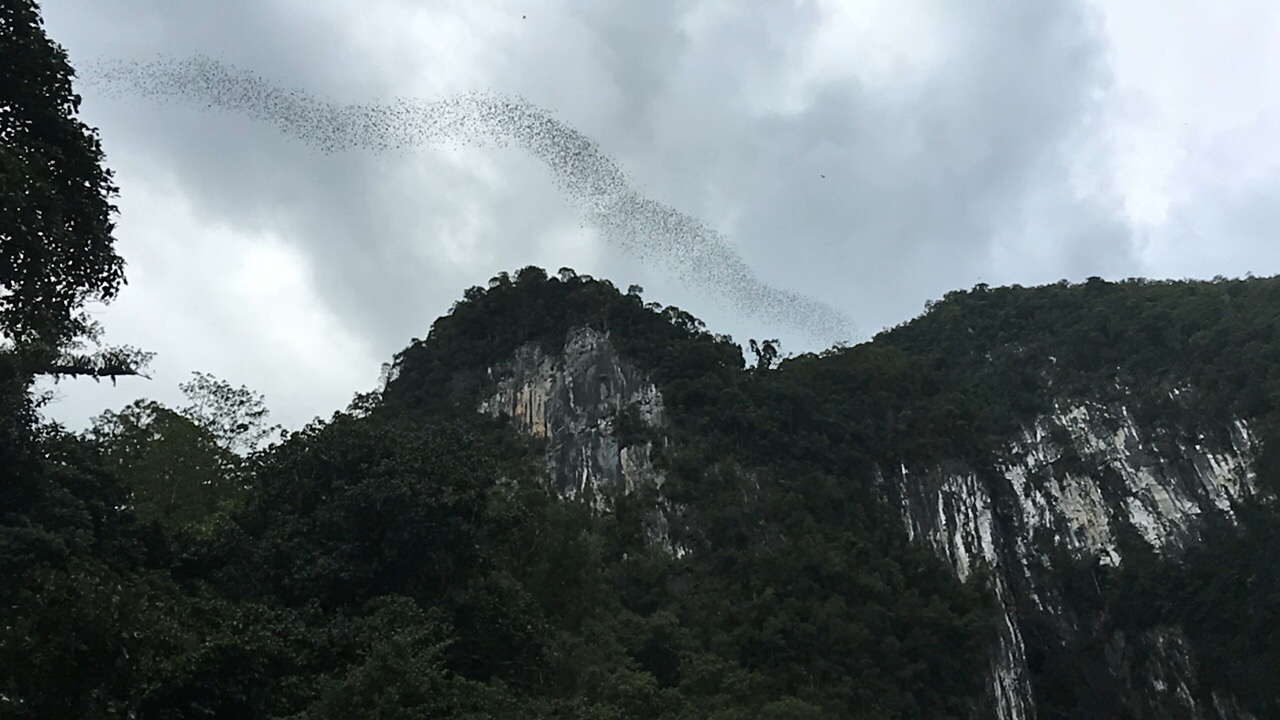
Deer and Lang caves: Deer and Lang caves are part of the same connected cave system but Deer Cave is the most famous of the two. Deer Cave (specifically, Sarawak Chamber) is currently ranked as the largest single cave chamber in the world. It was impossible to capture the sheer size of Deer Cave in photos. Lang Cave, while much smaller, is home to many intricate and interesting formations.
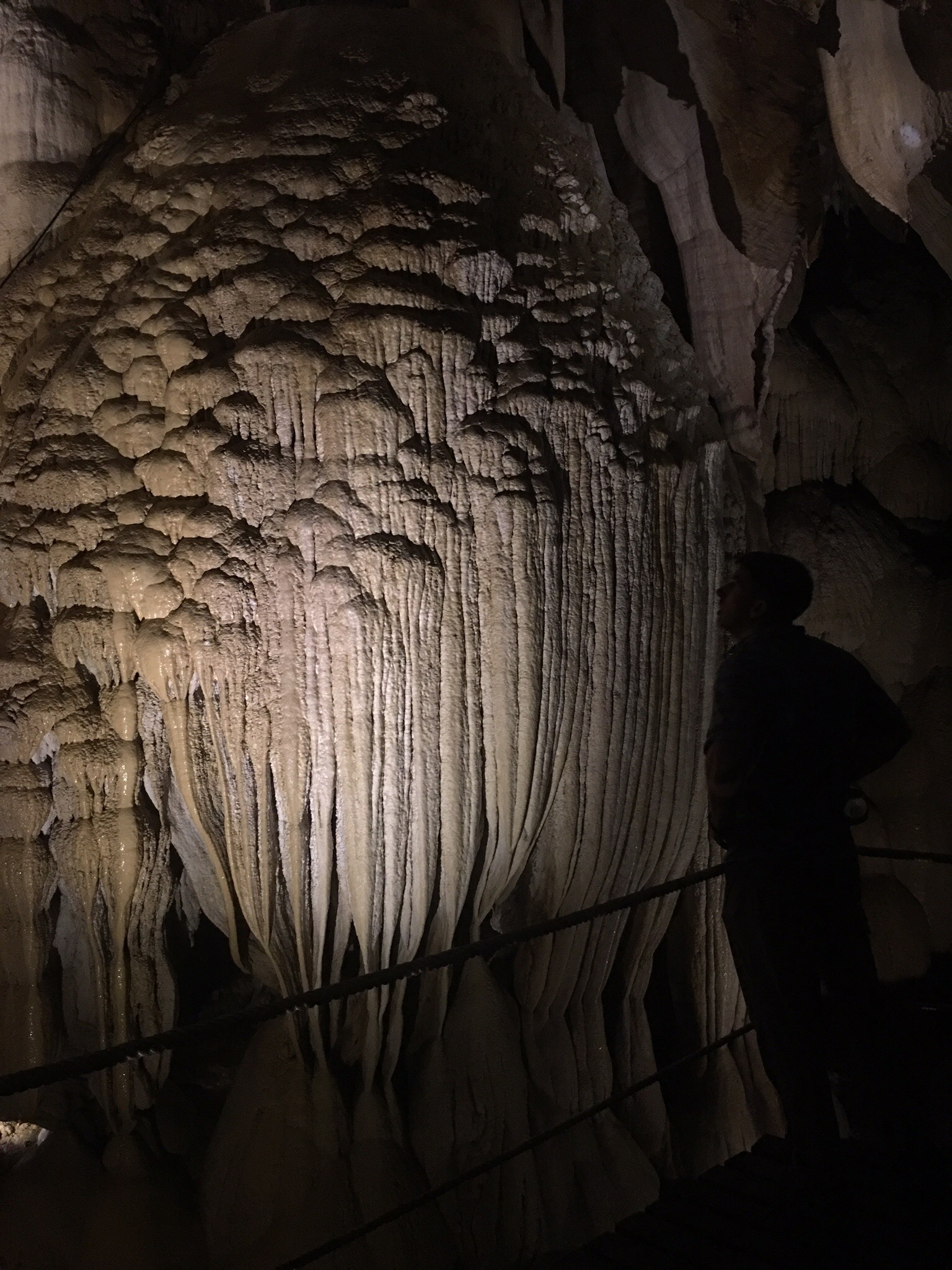

Bat Exodus: Deer Cave is also home to 12 different species of bat. There are over 3 million bats living within Deer cave. Between 1700 and 1800 every night, they exit the cave enmasse in what has become known as “bat exodus.” The bats are then hunted by Hawks that wait outside the cave for the exodus to begin (Chad swears he saw this on “Nat Geo”).
Deer and Lang tours are only offered together and cost 45 RM. Tours to Deer and Lang Caves depart at 1400 and 1430 from the park office. You can also make your way to the bat exodus viewing area without taking part in the daily tour.
Clearwater Cave system: The Clearwater Cave system is the largest connected cave system in the world and is comprised of numerous, smaller named caves (including Wind Cave). You can do a walking tour of a large section of Clearwater Cave and/or do spelunking through portions of the cave system by joining one of the park’s “Adventure caving” tours. We loved Clearwater cave because it still has an active river running through it, which is pretty remarkable to see. You will travel by boat to Clearwater Cave (there are no roads or trails this far into the park). Along the way, you will see local Penan villagers on the river bank. You will also stop at a “longhouse settlement.” The longhouse settlement was set up by the Malaysian government in an effort to compel the normally nomadic Penan tribe to settle down and establish a monetary economy.


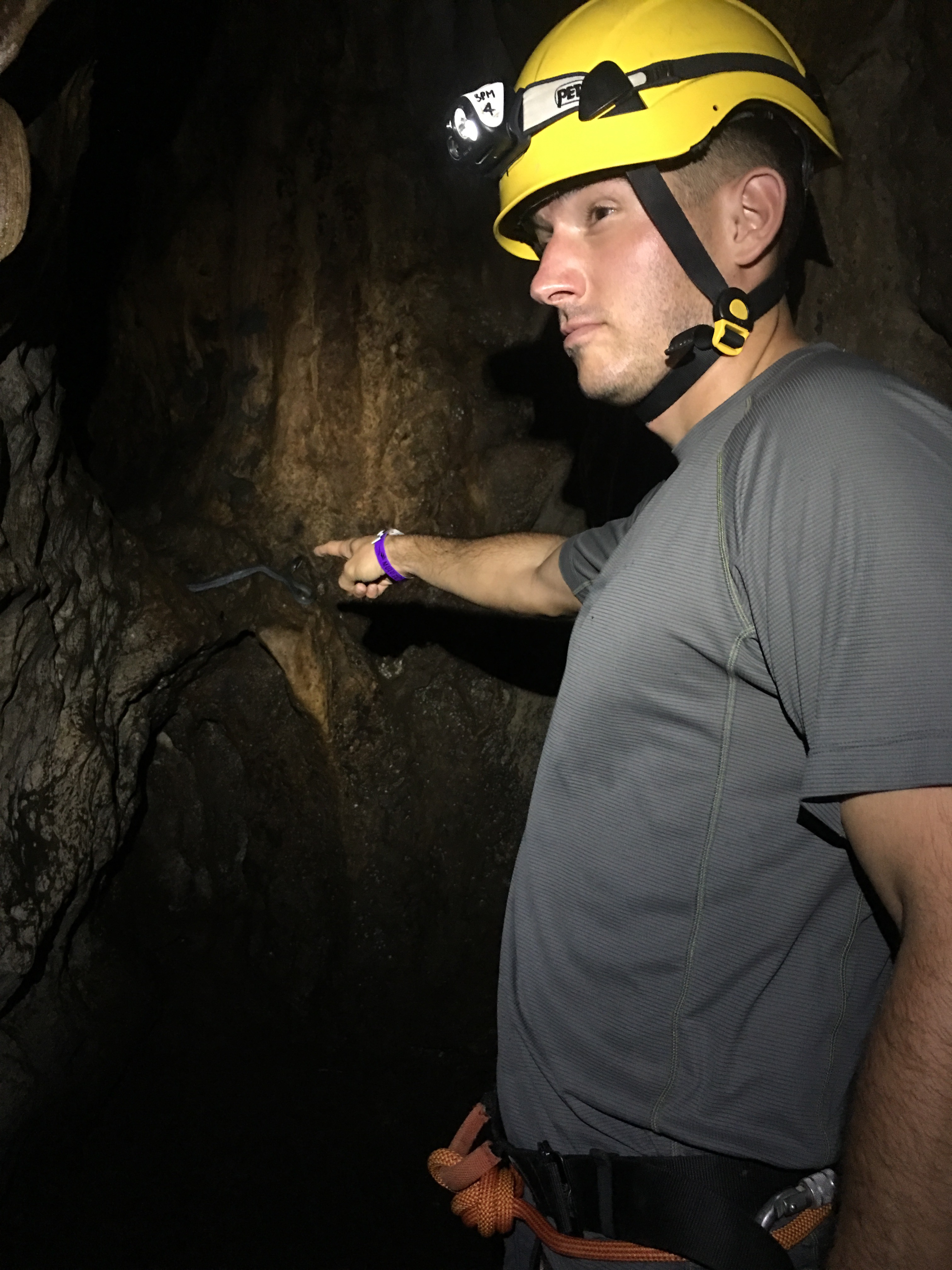
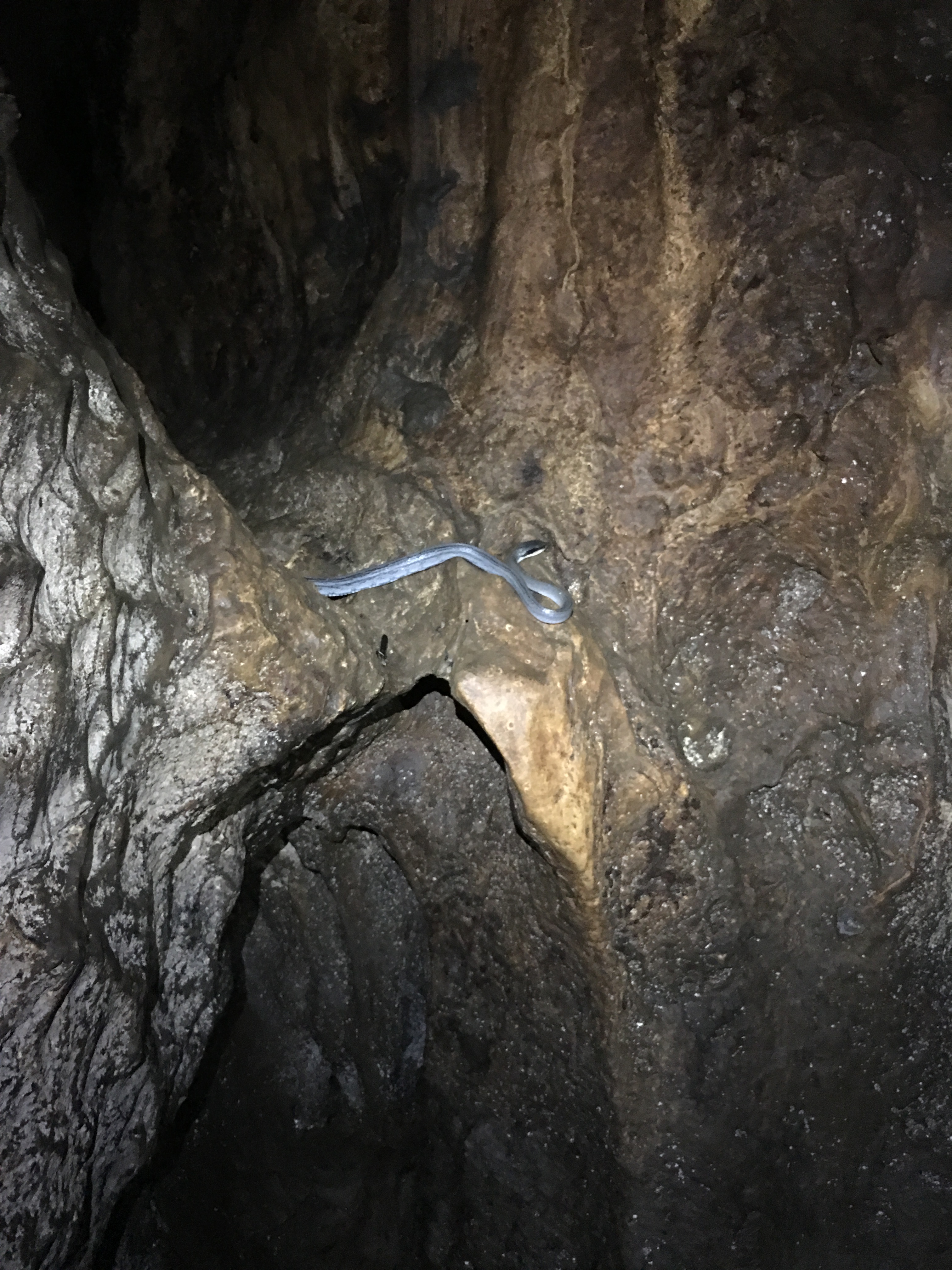
Racer Cave: Racer Cave is named after the Racer snakes that live in a corner of one of the cave chambers. Chad and I chose to go spelunking in Racer Cave. If you go spelunking be prepared! It is pretty hard work. Racer Cave involved a lot of rope climbing and a lot of darkness. The work is worth it–Racer Cave was definitely the highlight of the trip. I think Sammy would have loved spelunking. One day when he is older maybe we will take him to Borneo (or, perhaps, another, closer cave system in the US). Racer Cave was 160 RM and all gear was included. You can inquire about “intermediate” and “advanced” caving packages at the park office as they are offered at different times and different days and many, like Racer, are not aggressively advertised.


Other activities offered at the park include the night and canopy walks (along the largest tree based canopy bridge in the world).
If we had more time in Sarawak we would try to make our way to Kuching and the Orangutang sanctuaries–both of which were highly recommended by other travellers. But we are ready to get home Sam, Jack and THE Banana.
A big thank you to Grandma and Pop Pop for watching the little hell raisers while we were away (and somehow magically extending Banana’s sleep time from 1am to 3am)!
 Will Travel with Toddlers
Leave a comment