
There has been a string of cooler days in Bangkok lately. Today, the temperature was in the high 70s/low 80s. This type of weather is unheard of in Bangkok (as it is typically hovering around 95). We decided we should take advantage of the cooler weather to go and see some of the local attractions we had not made it to during our first tour of the historic sites/temples.
Today we went to Wat Arun (formal name Wat Arun Ratchawararam Ratchawaramahawihan), Wat Pho (Wat Phra Chetuphon Vimolmangklararm Rajwaramahaviharn) and Wat Saket (Wat Saket Ratcha Wora Maha Wihan). We finished the day by stopping by a “monk bowl” shop outside Wat Saket.
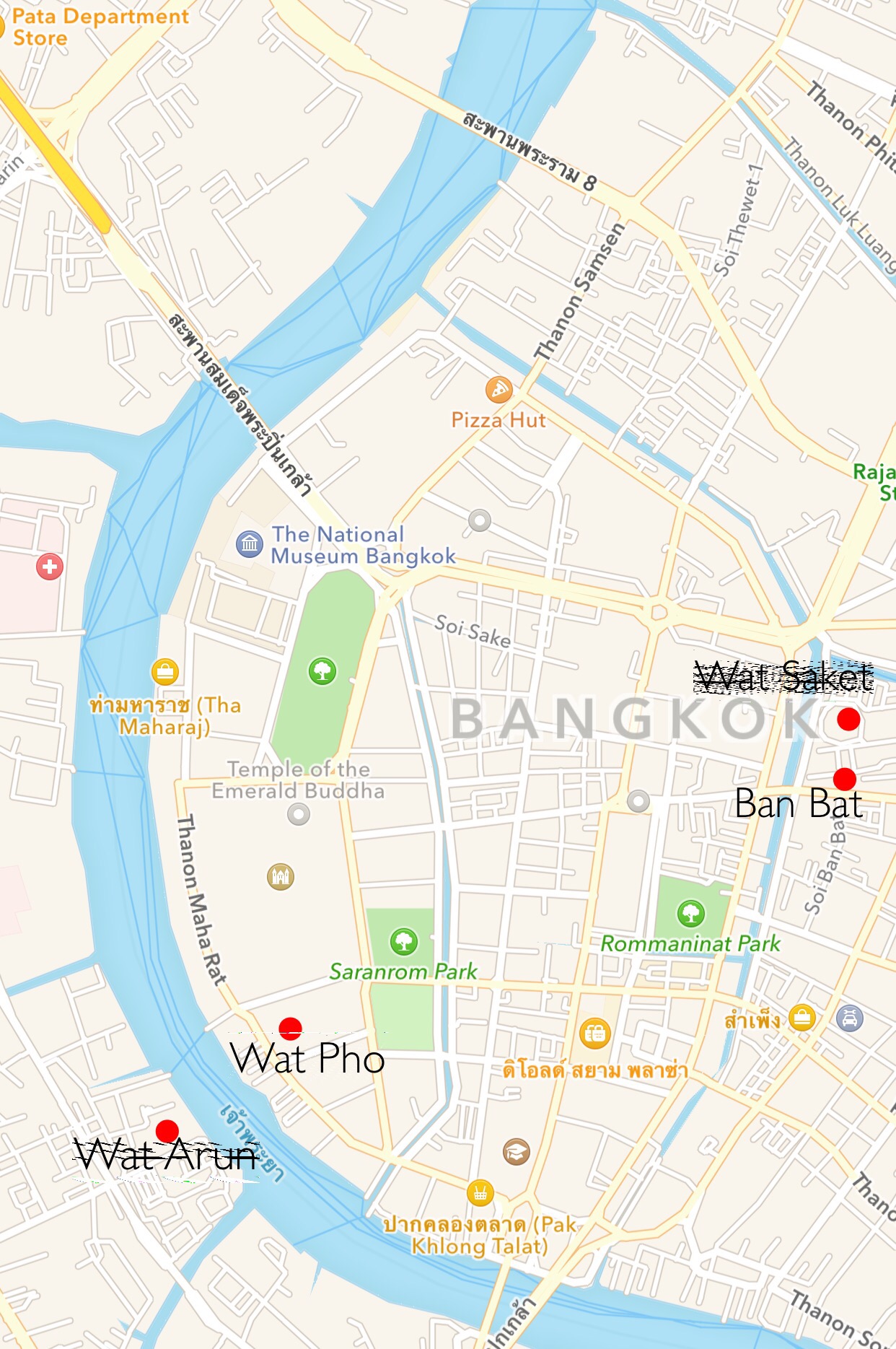
To get to Wat Arun and Wat Pho we took the BTS sky train from the Phloen Chit station to the Saphin Taskin BTS stop (which is co-located with the Central Pier/N1 water taxi stop). From the Central Pier, we took the water taxi north along the Chao Phraya River. The water taxi stops frequently along the eastern side of the river — making it a quick and easy way to visit the major historical sites (including the Mandarin Oriental Hotel, Grand Palace, Wat Pho, etc). The tourist taxi is marked with a blue flag and stops at every stop. The tourist taxi also has a tour guide who speaks some level of English. Tickets on the tourist taxi are 40 baht (approx 1.10 USD) one way or 150 baht (approx 4 USD) for a day pass (getting on and off as much as you want). Other taxis are marked with an orange, yellow or green flag and are frequently referred to as commuter taxis. These taxis cost cost 15 baht one-way and do not stop at every stop (making for a faster trip)–and do not have English speaking drivers. The ticket sales people try to get all Westerners to go on the Blue flag, we really have to turn on the charm to get on the commuter boat (all Thai people). A map indicating which commuter taxis stop at which stops can be found near the ticket counter at the central pier. Commuter taxis also do not operate on weekends. To get to Wat Pho or Wat Arun you can take the river taxi to stop Tha Tien/N8. At Tha Tien you can exit the pier and walk approximately 500 meters to Wat Pho or you can pay 3 baht to board the ferry to Wat Arun. We first went to Wat Arun then returned to quickly tour Wat Pho.
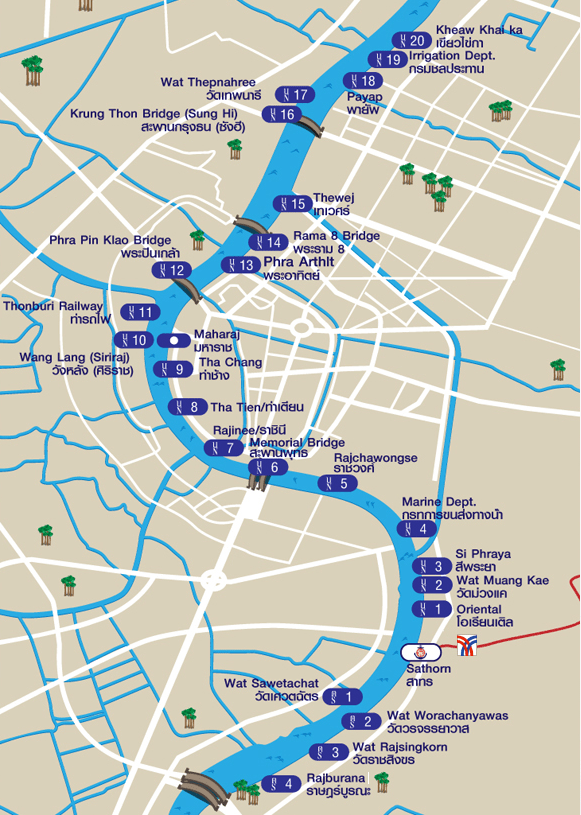
After Wat Pho we took a taxi 7 minutes down the street (40 baht) to Wat Saket and finished our day on Soi Ban Baat looking at “monk bowls.” Tuk Tuk wanted 200 baht to do the same trip…
It’s important to remember to wear pants to the Wats and an appropriate shirt. Wats typically will not allow entry to anyone wearing shorts or tank tops. You will also be asked to remove your shoes before entering any of the temples. Foreigners will be asked to pay a small entrance fee at each Wat (typically between 100-200 baht/approx 3-4 USD).
Wat Arun (Temple of the Dawn)
Wat Arun is one of the only major tourist attactions located on the western side of the Chao Praya River in Thonburi district. Wat Arun has existed in some form since as early as the Ayyuthaya Kingdom. It is depicted on maps as early as the mid 1600s. It is covered in small glass and porcelain tiles which are mostly white. At sunrise, the tiles reflect a bright pearl or golden color. Wat Arun’s central location on the river, across from many major hotels, also makes it recognizable.


Wat Pho (Temple of the Reclining Buddha)
Wat Pho is located directly south of the Grand Palace (about one block). Wat Pho is believed to have been built during the reign of Rama I (sometime after 1688). Wat Pho is commonly referred to as the Temple of the Reclining Buddha because it houses a massive 46 meter golden Buddha who is depicted in the “reclining” position (laying on his side). The reclining position is meant to depict Buddha in his final stages of sickness before death and his entry into Nirvana. It is common to see Buddha depicted in this position.


Wat Saket (Golden Mount)
Wat Saket was built later than Wat Arun or Wat Pho (sometime in the 1800s). It was built atop a large artificial hill. Wat Saket is located in a neighborhood known as Ban Baat. Ban Baat is known for its “monk bowl” shops. The term monk bowl refers to the alm bowls carried by monks and used for asking for merit (donation). Ban Baat has been the location of the production of monk bowls since the 1700s.


We have covered most of Bangkok at this point! It will be nice to get out of the city… and out of the country… in the coming months. Next up: Bali, Malay Peninsula, Borneo, Phuket and Khao Yai.
 Will Travel with Toddlers
Leave a comment